The expression "Tuscan villas to
rent" means different things to
different people. The archetypal Tuscan villa is a palatial Renaissance
structure, the creation of one of the ruling families of Tuscany,
Italy during the 15 C. The Medici
villas of Tuscany
are the most famous examples. However, "Tuscan villa" also
refers to more modest houses, especially the principal building on a
large fattoria (farm or vineyard) and many of these are available as
holiday accommodation, either in the form of hotels or as self-catering
Tuscan villa vacation rentals. Some tourist agencies even apply the expression
Tuscan villas to rent to any house in the Tuscan countryside that isn't an apartment.
This is possibly a usage based on the distinction sometimes made between
row houses and free-standing houses - "villas" - in England. However, the more widely accepted
usage is that a farmhouse, even quite a large one, is a casa
colonica, a form of vernacular architecture, in contrast to a villa which has been
designed by an architect to be a unique structure of artistic value.
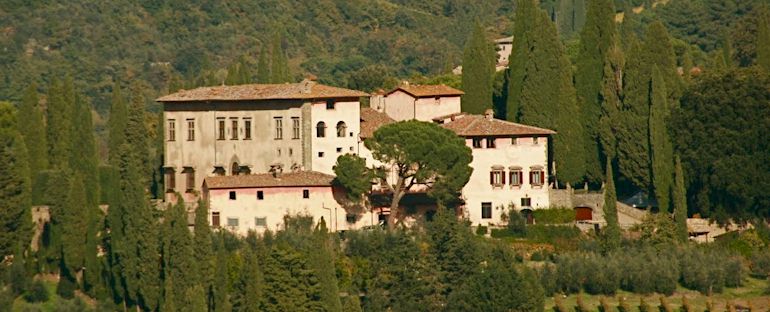
A classic Tuscan villa - Villa
Vignamaggio on the road between Greve in Chianti and Lamole.
"Roman villas",
in contrast, are almost always true villas and not large farm houses.
These baronial structures were built initially within the confines of Rome, usually
on the hillsides, but from the 18 C onwards a great many were build out
in the country so that their owners could escape the summer heat of the
city. A few of them are now available for short term rent and make ideal
vacation accommodation for those who like comfort and privacy.
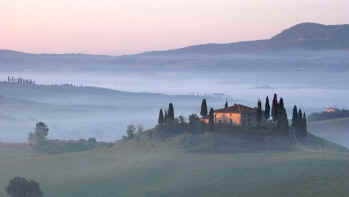
A Tuscan Casa Colonica
|

A Renaissance Tuscan Villa
|
|
|
|
Here we list some carefully selected Tuscan villas to rent, Roman
villa rentals, villa hotels, restored monasteries and large case coloniche that are
available for your vacation in Tuscany and the Roman Campagna.
Usually a villa must be rented for a full week, but they are also often
available for Tuscan weddings and for Tuscan travel incentive and team-building events,
especially networking events where wine tasting and gourmet dining are
important.
|
)
)

)
)
)
)
)
)
)
)
)